The Female Divine in Pop Culture
Posted: March 20,2020 – Updated: April 17, 2020
Intro to Blog: Marxism and the Consumption of Popular Culture – Is it Good or Bad?
Pop culture holds a lot of power because everyone finds at least one connection to something specific they like about it. It creates a sense of excitement and suspense about that particular thing that they like and most of the time, in a way, sucks people in too deep. Foucault says this power that one may have creates, “…‘regime of truths’ [that] do not have to be ‘true’; they have only to be thought of as ‘true’ and acted on as if ‘true’. If ideas are believed, they establish and legitimate particular regimes of truth” (Storey 135). These actors, musicians, and influencers we see everywhere are not necessarily the best people to rely on because sometimes they like when their fans/followers defend them in situation that are not needed. I feel like this power does brainwash a lot of those who love certain pop culture; This is especially true for musicians and bands.
After reading about Marxism, I feel my consumption of popular culture is a positive but also a negative factor. I believe this because, my knowledge on different forms of popular culture keeps me up to date with what’s going on in the world. It’s what helps me connect with the rest of the world and create conversations regularly. However, this is also something negative because of the obsessive and power factor. It creates a conditioned and constant connection to popular culture almost like a habit to always look through social media to learn more about influencers and their daily tasks. This connects back to Marxism, in that, the superstructure changes and reflects on the base. The superstructure that is essentially knowledge and constant build of history, changes overtime and, we in the base, change with it. We create new history all the time and as Marx says, “The Marxist approach to culture…must be analyzed in relation to their historical conditions of production (…the changing conditions of their consumption and reception)” (Storey 61). What I am trying to say is, this consumption of popular culture is important to know the history of certain parts of popular culture, which will be important for the future of it. In this case, learning about certain parts of popular culture will create more updates of the same subject in the future so it can be important to be aware of it. I feel this is also negative because, again, the power aspect of believing in it too much; when most of popular culture is publicized and staged. However, I mostly pay attention to the parts that I am interested in and rather not dig myself into a hole of pop culture I rather not follow.
Since I did not get the chance to write a blog on our female superheroes of pop culture and film, here is a really great montage/edit of the best female superheroes of our time. Hope you enjoy!
Posted: March 20, 2020 – 7:47PM
Blog 1: Lady Gaga’s Super Bowl Halftime Show
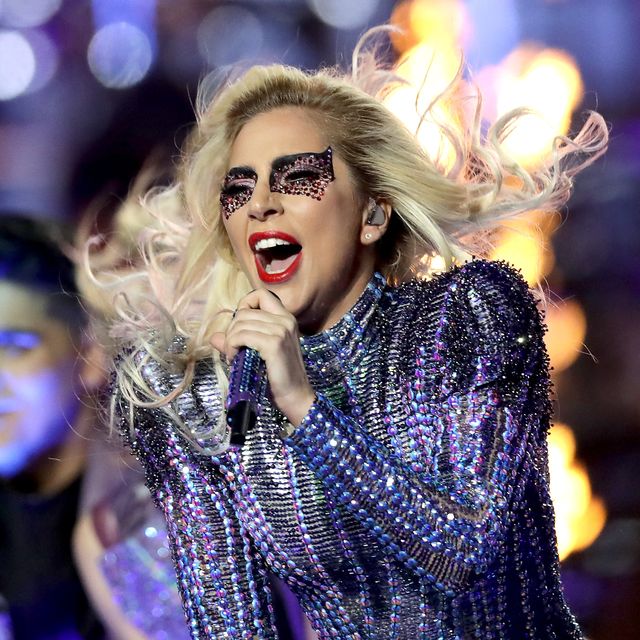
After watching Gaga’s Super Bowl performance, I really give her such kudos for giving the performance that she did. I have seen this performance before but, after reading so much on feminism and the female divine, I noticed such small details that played a large part in sending a message. She starts off the performance by stating certain parts of the national anthem then jumps to start her singing. She displays the female divine throughout this performance by showing her confidence and being a symbol of strength. Furthermore, Gaga has always fought for the equality of sex, gender and race and I feel this is her calling out America on its wrongdoings. She even sings her most political songs to highlight this: “Born This Way,” “Telephone,” “Bad Romance.” In “Born This Way” the song alone can tell you so much of what she is trying to say to everyone that it does not matter who you are and where you come from, you are still beautiful in your own way. In “Telephone,” there’s a moment she is held by a man and she is fidgeting to get out of his grasp. In the book titled “Gaga Feminism” by J. Jack Halberstam he gives an interpretation of “Telephone” when he writes, “…[the song] makes violence against men into its signature and its enigma” (64). She is a beacon of hope for many women by showing the true message behind her music through her performances. Adding on, the colors red, white, and blue, signifying the American flag, is seen at the very beginning of the show and at the end (During “Bad Romance”) with the red and blue in the crowd and Gaga and her background dancers wearing white. I feel this could symbolize Gaga’s fight for equality in a way. While I feel it is also to highlight America’s wrongdoings, it can also symbolize Gaga’s fight to show the world a better way. Lastly, Lady Gaga’s outfits have always been known to be iconic and weird in her own way and she showed that in this performance as well. Halberstam highlights this too saying, “When Lady Gaga wears a meat dress or five-inch heels, she does so to call attention to the whimsy of personhood, the ways in which all need to see each other anew, find new surfaces, name those surfaces differently and confuse the relations between surface and depth” (26). This is Gaga’s true nature in showing the world something new and I think her looks in the show stand out the most when she sings “Born This Way” and “Bad Romance” because in both she’s essentially highlighting the differences people have but it should not matter because everyone is beautiful in their own way.
Gaga displays the female divine by showing her confidence, strength, motivation, and power throughout her entire performance. She is showing the world the power of a woman and the talent one displays. Her music also sends a message that tells everyone that no matter what you look like and who you are your worth it. She shows the power of the female divine by displaying herself on stage and giving all she can to this performance.
Posted: March 26, 2020 – 2:15PM
Blog 2: The Female Divine in Beyoncé’s Visual Album – Lemonade
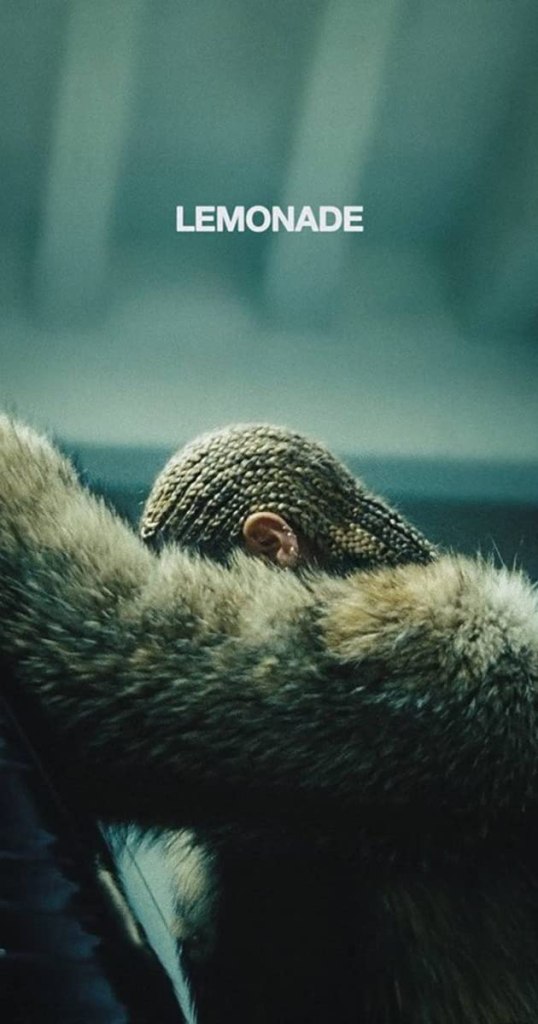
When Beyoncé’s visual album Lemonade was released, it was known as a political and controversial piece. In the album, she displays her own form of art that confused many people because the purpose of the visual album was to send a message. Beyoncé explained, “I wanted people to hear the songs with the story that’s in my head ‘cause it’s what makes it mine. That vision in my brain is what I wanted people to experience for the first time” (Elberse 8). On the surface, she is telling a story about her cheating partner and her stages of grief and processing, however, when analyzed, she is fighting for women’s rights and a voice to be heard. Based on my viewing of Lemonade, Beyoncé and Jay-Z were not set up to be a fairytale. The whole album itself reflects on Beyoncé’s pain of her significant other cheating on her and having to deal with the heartbreak that came with it. She talks about it in between the music videos and questions why he did what he did. After reading Gaga Feminism by J. Jack Halberstam book, I got a better understanding of feminism and gained a lot of knowledge from the chapter titled, “Gaga Relations: The End of Marriage.” Halberstam writes, “…we might find that while marriage seems inevitable as a social form, in fact we all know people who not only do not get married but are happily single…” (126). When I read this, I made a connection to Lemonade because on 18:36 of the short film she says, “…middle fingers up, tell him ‘boy bye’” and the whole song itself talks about being strong independent women who does not need a man.
It also seems like she’s in the stages of anger in the music video and I feel this connects back to Halberstam’s argument that women do not have to be married to be happy and live a great life; it is a socially constructed part of society. Not only this but in the chapter titled “Gaga Manifesto,” Halberstam discusses more on the economy. He writes, “…people need to be woken from their slumber by public actions, odd and eclectic events that shock and inspire people and compel us all to look for alternatives to the status quo” (Halberstam 136). Beyoncé shows this Invisible Committee’s purpose throughout all her works; she strives to open the eyes of those who don’t see the bigger picture and those who have forgotten the past. The music video of “Freedom” from 44:30 to 50:20, highlights exactly what Halberstam discusses to wake up and see what is really happening and take action. Something Hallberstam discusses also connects the dots to Beyoncé when he said, “…there can be no viable concept of revolt today that does not link the personal and political, the private and the public, the particular and the general” (137). This is very true because everything is connected and Beyoncé’s work can be interpreted the same way that there’s no personal without the political when it comes to her work. There’s also no private without the public in this case, her life being constantly budded into media. This statement has a clear connection to Lemonade and Beyoncé herself. Her personal opinions, thoughts, and overall work and career has a connection to her personal and political views. Beyoncé displays the female divine through the messages she is trying to send and the image she has created for herself. She only wishes to change the world for the better and show that all women who have been oppressed need and will be heard.
Posted: April 3, 2020 – 1:48PM
Blog 3: The Handmaid’s Tale on Hulu
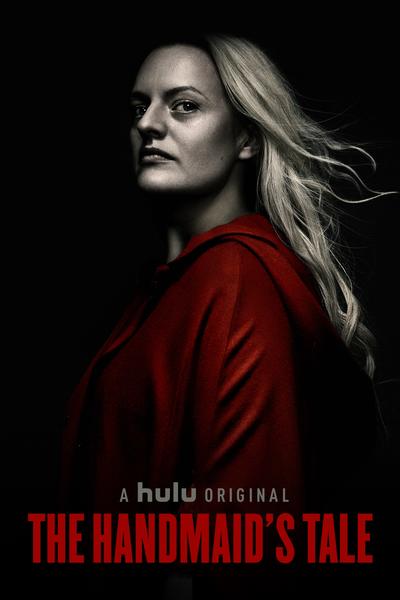
Hulu’s original television adaptation of Margaret Atwood’s successful novel, The Handmaid’s Tale, is widely known by readers and tv show fanatics. The show and book both have brought up the conversation of patriarchy, sexism, corruption, homophobia, rape, etc. It has discussed many brutal topics that our society likes to avoid especially, the topic of religion and gender. Everything about the show has been meticulously set to help the viewers understand the world of Gilead and its people. The show is set in what was once the United States of America, a country of freedom and rights, is now a world filled with only the rules of the Bible (The Old Testament) and a patriarchal society. It follows the main character, June and her journey through her capture and life in, what is now, the Republic of Gilead. In the show, viewers watch June’s past and present life as she endures her worst fears and pains in Gilead. Through rape, beatings, and forceful obedience she is put in the position of a “Handmaid,” to birth a child to a family that is not her own. Not only has she been taken from her actual family from her past but also, she is forcibly raped every month to carry a child and give it up. From the language used, to the roles each individual plays, The Handmaid’s Tale is a violent world where women are not allowed to read, speak when spoken to, and always listen to men’s wishes.
“‘Nolite te bastardes carborundorum,’ I say…It meant, ‘Don’t let the bastards grind you down’ (185-187).
The Handmaid’s Tale by Margaret Atwood (novel)
Gender is one of the most important parts of the show; it’s what progresses each episode forward. The show portrays present and past gender in that it moves backwards when it comes to human rights. The whole show is presented with flashbacks, in present time, to connect certain situations to each character. From the decision to switching a free nation to a patriarchal one, or learning about the lives of each character before the change, the viewers come to understand the drastic difference of gender and obedience. During flashbacks, viewers are shown present day America where Amendments, the Constitution, and all other rights are stilled valued by the United States government. However, when taken back to the present times of the show, viewers are introduced to a colonial styled society where women are treated as property and are limited to do certain things. In this male dominant society, the laws are shaped by Christian values meaning everything and anything is done through the written word of the Bible; some are even taken as far as punishing those who don’t listen by cutting body parts off. For example, if a woman ever read any piece of writing they would lose a finger or if they were disobedient in any way they would lose an eye – “If my right eye offends thee pluck it out” is lines spoken by handmaids. The creators of Gilead believed this religiously obsessive world would bring order to humanity and create a stable process to birth children but all it does is create more chaos.
We can see the female divine through the character of June. She has been given a new name, Offred which means, belonging to Fred. She is only treated as a fertilizer, who will birth children. She is the female divine in the show because she constantly remembers her past and never forgets her whole life. Throughout the whole show, we watch as June does her best to fight her way out of Gilead and back to her daughter and husband. She believes her purpose is to save as many handmaids and children as she can before she tries to escape. To me, I think she represents the goddess of life because she is used to birth children, she does everything in her power to get her daughter back, and she protects and saves those she finds. I think she is the perfect representation of the female divine in this messed up dystopian world. I highly recommend this show! It is so good! You won’t regret watching it!
Posted: April 10, 2020 – 2:29PM
Blog 4: The Woman Warrior “Chapter 3: Shaman”
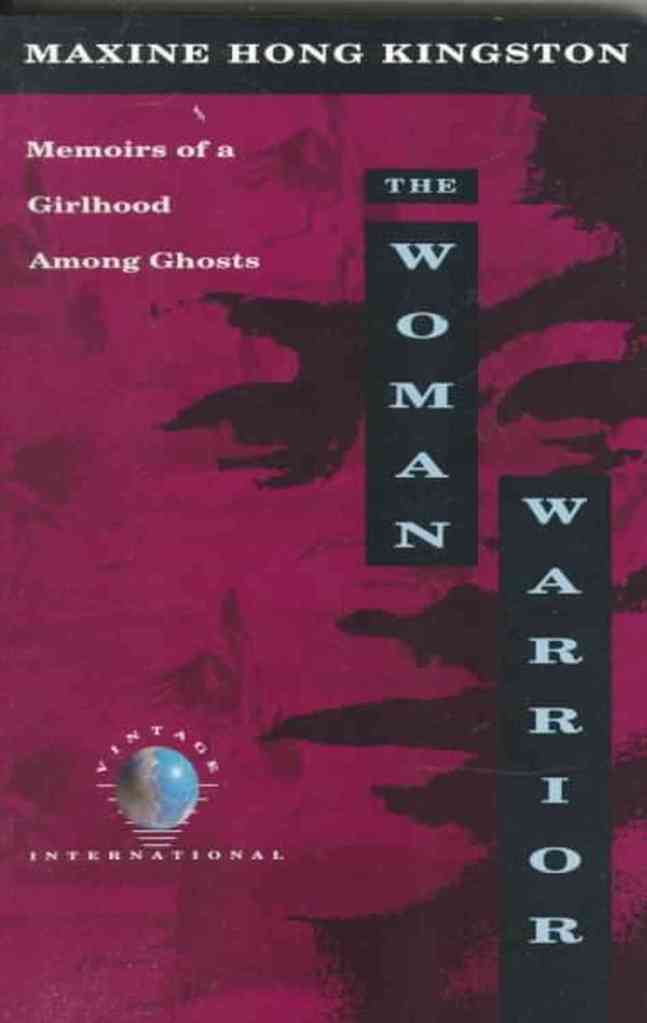
In “Shaman,” the book takes a different perspective and focuses on the story of Maxine’s mother, also known as Brave Orchid. In a way, we learn that Maxine looks up to her mother as a hero and someone she aspires to be. Kingston writes each chapter as a stepping stone. As she grows up hearing the story of her aunt, Mu Lan, and now her mother, she shows the reader each character is a role model for different stages of her life. Now considering Mu Lan as a failure, Kingston describes her mother as the new woman warrior who became an independent woman and worked past the hardships throughout her life. Brave Orchid was seen more than just a fragile woman but she is depicted as a confident, heroic warrior. When she came to America, she finds that all social and cultural values are different. She is forced to give up her medical practices and become her husband’s helper in the family laundry business. At the time, it was difficult for Asian American women to make such a change by immigrating to a new world. According to Asian American Women and Men: Labor, Laws, and Love,: “Confronted with language barriers, cultural differences, limited economic opportunities, and the sheer pressure of daily survival, many World War II wives were disillusioned and disappointed with their new lives – and…with their husbands” (Espiritu 66). Even though Brave Orchid went through the hardships in this new world, she became accustomed to her new life. She maintains her honor and glory by working hard and never giving up no matter how tired she was: “I have not stopped working since the day the ship landed. I was on my feet the moment the babies were out…I can’t stop working. When I stop working, I hurt. My head, my back, my legs hurt. I get dizzy. I can’t stop” (Kingston 104-106). Brave Orchid strives to keep the sense of honor and pride of an Asian American woman but also to promote the story of the woman warrior. As a woman, she was not allowed to practice medicine in the United States. She fell into the category of unskilled and incompetent immigrant women workers at the time. Not only were Asian American women put into this category but white American women also did not have as many rights either. Language, culture, and mentality barriers were a immense change for a foreigner moving to America. In a constantly changing world, it created a sense of isolation and difficulty to fit in. So, Brave Orchid does her best to work with what she has and what she can do, to support her family aside from her husband. Brave Orchid is the perfect representation of the female divine because she is depicted as a warrior, a mother, and a protector.
“My mother may have been afraid, but she would be a dragoness. She could make herself not weak. During danger she fanned out her dragon claws and riffled her red sequin scales and unfolded her coiling green stripes. Danger was a good time for showing off” (67).
The Woman Warrior by Maxine Hong Kingston
Posted: April 11, 2020 – 3:22PM
Blog 5: Incidents in the Life of a Slave Girl by Harriet Jacobs
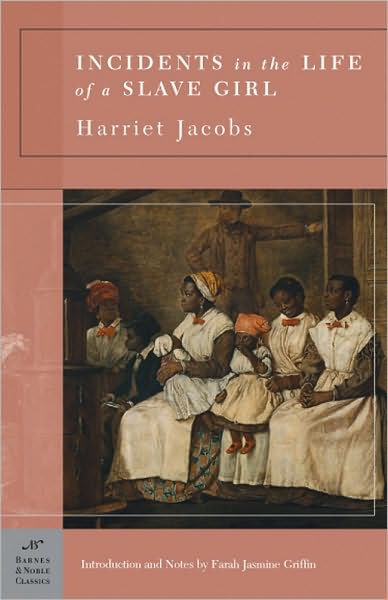
In Incidents in the Life of a Slave Girl by Harriet Jacobs takes readers on a journey throughout her life, showing a first person point of view of how difficult it was to be a female slave. From losing her family members and being sexually abused, to suffering by hiding in a small roof shaped attic for seven years, she makes it very clear how female slaves suffered more than male slaves. From a female’s perspective, Jacobs writes how much worse African American women suffered than men in Incidents in the Life of a Slave Girl by providing evidence on how women were treated in slavery and displays the female divine through her struggles to survive and protect her children. Jacobs endured: family separation, abusive treatment, sexual abuse, child bearing and rearing, and forcefully being taught a erroneous form of religion. Jacobs writes about her experiences of sexual abuse and what her master, Dr. Flint, did to her. Jacobs never truly states that she was a victim of sexual abuse but she does it with double entendre’s. For example, she writes, “I wanted to keep myself pure; and, under the most adverse circumstances I tried hard to preserve my self-respect; but I was struggling alone in the powerful grasp of the demon Slavery; and the monster proved too strong for me” (64). Here, she alludes to herself as being a victim of rape as the monster, or her master, was too strong for her to overcome.
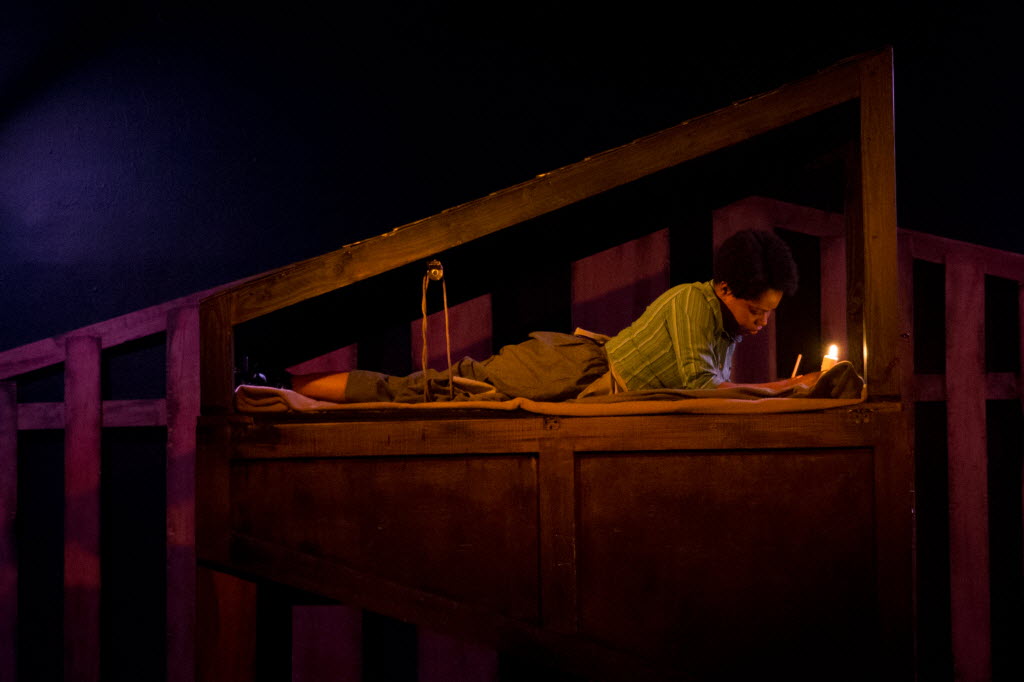
Jacobs not only talks about her day to day accounts of manipulation and assault by her master, but also the hate she received for having mulatto children. Jacobs also discusses the events leading up to her pregnancies. She had no choice but to conceive children because either she would be raped by her master or try to find love and have a child. This caused many problems for Jacobs because she was considered a tainted woman and it angered her master, as well as, caused more violence. She expresses, “When Dr. Flint learned that I was again to be a mother, he was exasperated beyond measure…I replied to some of his abuse, and he struck me. Some months before, he had pitched me down stairs… and the injury I received was so serious that I was unable to turn myself in bed…” (Jacobs 87-88). Jacobs did what she thought would be the best for herself. Whatever choice she would have made in this situation, she would have still been hurt and beaten for it. Female slaves did not have many choices in any matter but to obey, listen, and do. On top of all this, she was forced to flee because Dr. Flint want planning on selling her children so she hid in a small roof-attic for seven years of her life hoping to one day be able to reunite with her children. If anyone would be considered to be the ultimate female divine it would be Harriet Jacobs because her goal was so survive as save her children in the process. She was a true fighter and survivor of the horrors endured by many back in the day. Furthermore she was forced to learn an incorrect form of religion. Jacobs wrote that she was forced to attend white preached sermons that spoke of slaves only as servants. The preacher said, “Servants, be obedient to them that are your masters…If you disobey your earthly master, you offend your heavenly Master. You must obey God’s commandments…” (Jacobs 79-80). She wrote this before stating the horror of a slave mother losing her daughter and crying for help from God while the white preachers laughed. These slave mothers would hold onto religion as a form of peace and hope as a coping mechanism however, Jacobs knew better than what was being taught. She truly is the perfect representation of the female divine because she suffered such hardships and saved her children from being sold and fled to England where she lived a better life.
“There are noble men and women who plead for us striving to help those who cannot help themselves…God bless those, every where, who are laboring to advance the cause of humanity” (37)!
Incidents in the life of a slave girl by Harriet jacobs
 anig321drive.car.blog
Fabulous blogging. Keep going
LikeLiked by 1 person
testing
LikeLike